genealogies and mappings

although the photographic practice of william fee mckinney did not begin until the 1880’s it does not stand apart from of his broader related interests across previous decades, with his photographic studies of kith and kin from the 1880s onwards being produced and assembled alongside his interests such as antiquarian studies, genealogy and local history and the collecting and display of artefacts. in fact across the five decades of mckinney’s life up to the 1880s, within the province of ulster and the whole island of ireland many rural populations had seemed to function on an ongoing basis as sites for typologies and discourses of display and observation, sites of interpellation within a society in which there was a complex interaction of identity formation, individual agency and culture: from the first 6′ mapping by the ordnance survey on the island in the 1830’s; to famine-related research visits across rural areas or farms from various commissions of enquiry from westminster or investigations into areas of ulster by charitable or aid institutions in the 1840’s and 1850’s; or across the 1860’s, 70’s and 80’s the pedagogic gaze of reforming landlords or politicians or reformers or authors; or the broader surveillance framework of the national network of notetakers of the royal irish constabulary and its network of paid petty informers delivering minutely detailed reports to the administration of dublin castle across the period of the land war; or the various graphic depictions from photographs of ‘eviction studies’ or urban sectarian riots for the national and international press of the time; and alongside these complex instances of visibilities, identities, opacities funcioning in ulster at the time, there were also other photographic studies of the region and its population being represented from the 1860s onwards within the essentialising paradigms of the picturesque and the antiquarian, such as the dioramas produced for events such as thomas charles stuart corry’s “diorama of ireland” active in belfast in the 1860’s or the those images being produced by ulster photographers for the lawrence collection of magic lantern slides and within groups such as the belfast naturalist field club.

the social practices listed above will ebb and flow across the development of this study of  the contemporary rationale/demand for the production of the photographic practices of william mckinney and james glass, but here we will  commence with the earliest of these – the first ordnance survey of the island in the 1830’s covering the period of mckinney’s childhood in sentry hill:

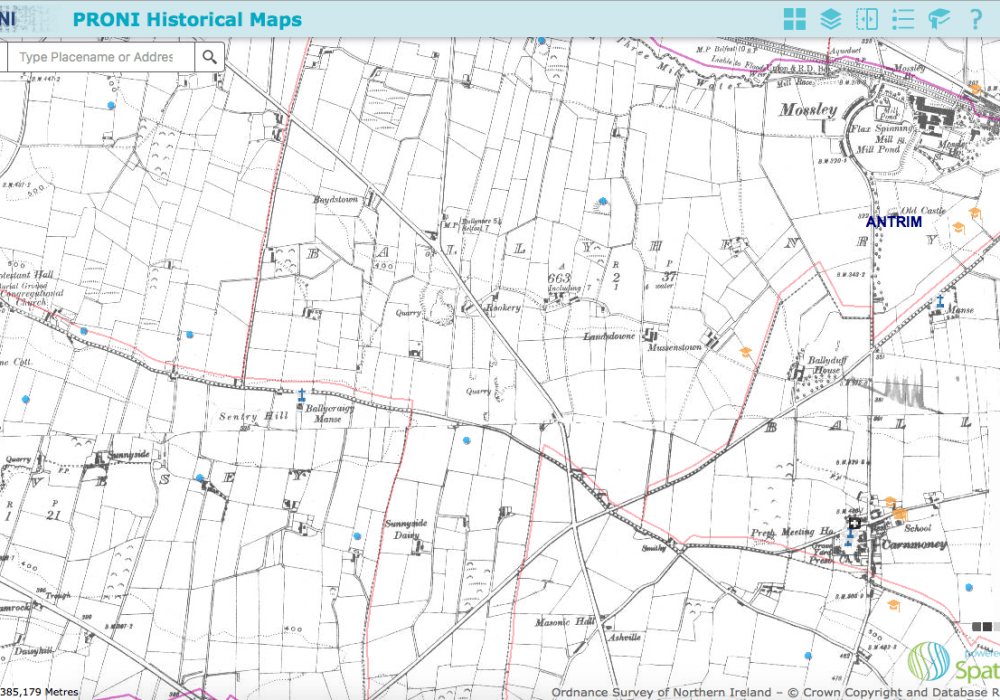
in 1824, a house of commons committee recommended a townland survey of ireland with maps at the scale of 6″, to facilitate a uniform valuation for local taxation. … the survey was directed by colonel thomas colby… civil assistants were recruited to help with sketching, drawing and engraving of maps, and eventually, in the 1830’s, the writing of the memoirs (from the ordnance survey memoirs of ireland, volume two, parishes of county antrim (i), 1838-9, ballymartin, ballyrobert, ballywalter, carnmoney, mallusk, pub the institute of irish studies, belfast & the royal irish academy, dublin, 1990)

this usefully establishes two things  – firstly that within mckinney’s childhood years, a significant survey was conducted, making an official recording, as map and hand drawn sketches and written accounts of this community, as part of the massive national undertaking of the first ordnance survey mapping across the island of ireland. this process was of such significant scale that it was both a national event and an event which made a significant presence within each local rural population, with by the late 1830’s a total of no less than 2,139 ordnance surveyors ‘crawling over the face of ireland’ (i) in a what was described in its time as ‘an embrace of anthropology, statistics, toponymy, antiquarianism, geology and map making … held up to be an exemplary model of interdisciplinarity’ (ii) and described since as a late exemplar of the enlightenment’s enthusiasm for ‘a vibrant public sphere of fevered collaborative discussion’ (iii).

on the ground, so to speak, within communities such as the parish of carmoney and the townlands of ballyvesey, ballycraigy, ballyhenry and mollusk that surround sentry hill,  this event would have been experienced as follows:

landowners and professionals (who) were members of antiquarian or literary societies, amateur collectors, and authors of local studies … introduced ordnance survey staff to other antiquarians, showed them the antiquities of the region, and allowed them to use their private museums and libraries, which often held valuable artifacts and manuscripts…. proprietors who held legal or political office, land agents, bailiffs, tithe and cess collectors supplied the ordnance survey with voluminous records and shared their expert knowledge… clerics, schoolmasters, small farmers and labourers, were excellent sources of information, especially in the countryside where there was continuity of settlement, and in Irish-speaking or recently anglicised areas where oral culture was still strong…. in rural ireland, generations of families often lived in the same place and preserved traditions about local place-names, history and legends, which they imparted to ordnance survey staff. topographical department scholars sought out teachers and clerics in particular, who often traveled with them to procure information, pointed out historic and archaeological sites, introduced them directly to ‘qualified inhabitants’, and put them in contact with knowledgeable people elsewhere…. most people gave assistance freely and generously… (iv)

in fact, we  can speculate with some certainty that within william fee mckinney’s childhood years that part of the mckinney family itself may have had the experience of a direct conversation with the note-takers and researchers of the ordnance survey. we can with some confidence assume a mistake in the written account of a ‘mckenney’ being consulted in the carnmoney parish as part of the survey, and we can assume the true name was mckinney as no mckenneys appear in records of carnmoney in this period. and so the we have a view from the ground provided by this survey:

extracts from fair sheets by thomas fagan, february to april 1839: ancient topography: discoveries in carnmoney: in carnmoney and holding of miss mckenney, and about a quarter of a mile north west of the church were discovered beneath the surface within the last ten years, quantities of decayed human bones, also a small earthen urn containing calcined bones and ashes…. the tract of ground in question was an ancient graveyard attached to the ancient city of cool, said to have stood in this district … it is further added that in the aforesaid miss mckenney’s farm stood an old draw-well which is now closed, but in which is deposited a large quantity of gold, silver and other valuables belonging to the above ancient city, and which was conveyed to it in carloads at a period when the city was threatened with destruction. (99)

and regardless of any direct contact, the process of the ordnance survey surrounded each and every homeplace. see for example the illustration above this blog posting features the part of the mapping process known as the detail survey with theodolites and chain lines, in which:

district commanders then used smaller theodolites to observe the secondary and tertiary trigonometric network. chain lines were run between the tertiary stations giving a check on the trigonometrical computed distance and facilitating the subdivision of the triangle for detail chain survey every road and track. all and hedge, river and stream, house and barn was surveyed and mapped. (v)

beyond the physical survey of the land, and beyond conversations and interviews recording the oral accounts of local antiquarian legend, the work of the written ordnance survey memoirs of ireland was experienced on the ground as research enquiring into into the broader dynamics and relations within local society, with queries into everything from manners to commerce and society:

extracts from parish of carnmoney, county antrim, memoir by james boyle,  28th april 1839:

ballycraigy, ballycraig: ” the townland of the rocks”, from bally and craig “a rock”. there are several little basaltic hummocks or cliffs in this townland…

ballyesey, “the town of the vesesys”… (34)

gentlemen’s seats: there are in this parish 17 gentlemen’s residencies, which with 2 exceptions are situated along its coast and which are nearly all of comparatively modern erection… they are with a few exceptions the property of a wealthy mercantile aristocracy, most of their owners being still engaged in trade as belfast merchants and a few of them having within a few years retired to the country… (46)

it is interesting to consider this discourse of status within a small social setting of this parish as the social and cultural framework within which william mckinney was born and raised, and within which he then in his subsequent adult years achieved a not insignificant economic status of  a gentleman farmer of some 100 acres. we could speculate that with the fact that the peak of the social status within this parish at the time being a wealthy mercantile aristocracy – in contrast for example to the arguable illegible ahistorical lineage and attendant status (fetish?) of a landed aristocracy – such a tradition of a local elite would be comfortably within the reach and within the field of vision of a gentleman farmer of some 100 acres, such as william fee mckinney.
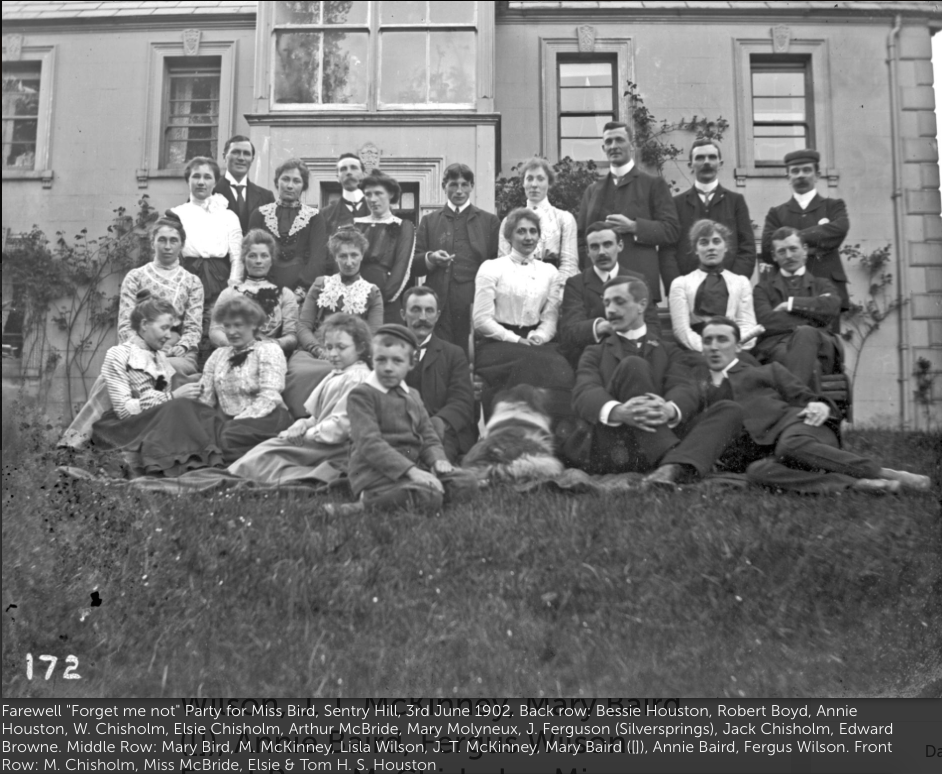
William Fee mckInney, Present were member of all the leading Carnmoney families Sentry Hill, 3rd June 1902 from NMNI collections

the photograph above has been described elsewhere as:

during the early years of the new century parties were often held at sentry hill. the photograph was taken by william mckinney on one such occasion in June 1902. present were all members of all the leading carnmoney families. (my emphasis) they included substantial farming families such as the chisolms and the houstons and also those like the mcbrides, wilsons, and boyds who owned local industries.  (78) (vi)

both this photographic portrait and this act of photographic portraiture function within what has been described as the informal socialization of elite groups (vii), determining mckinney as kith and kin within the wealth and status, within the social, political and cultural capital of a mercantile aristocracy, and in fact determining a mercantile aristocracy as a legible narrative against which a gentleman farmer of some 100 acres – and furthermore a gentleman farmer situated upon the foundation of a thoroughly researched and documented lineage of a place within the parish – could measure and determine with some satisfaction his own social, political and cultural capital.
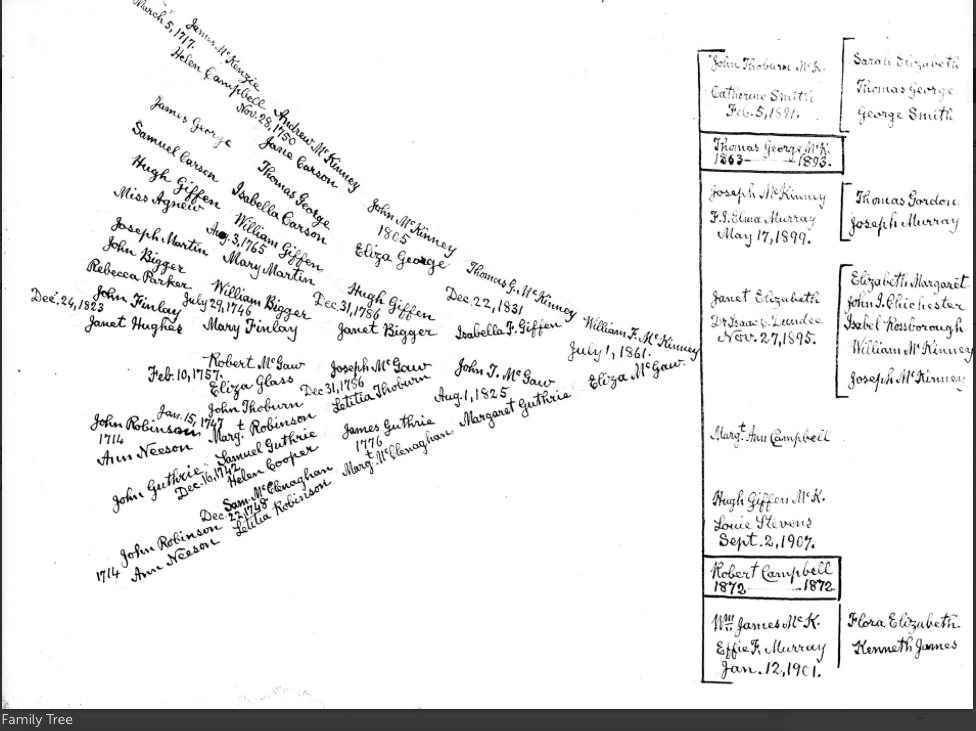
hoyfm.dundee111_family_tree_from_nmni_dundee:mckinney_collection_Screen Shot 2018-01-26 at 12.59.09

(image above is the mckinney family tree, researched, documented and handwritten by william mckinney) (marx on genealogy, heraldry, zoology may be of use here with reference to mckinney’s antiquarianism.)

and while this parish of carnmoney in which a gentleman farmer of some 100 acres resides could not in any sense be considered a nationally or regionally significant location,  it is important to note that these accounts record that it is not remote, and that within it there are communications facilitating contact with the regional centre of infrastructural power, finance, innovation, culture:

extract from: parish of carnmoney, county antrim, memoir by james boyle,  28th april 1839: communications,: roads: few districts are so amply provided as this, there being 13 miles 4 furlongs 34 perches of main and 19 miles 4 furlongs 16 perches of by and cross-roads, including the old main roads which have been superseded by the improved lines of modern construction. the roads are in fact much too numerous, but this arises from the number of important leading lines which traverse the parish and from there necessary improvements upon the old ones by the construction of those more suited to the great traffic between belfast and the districts west and north of this parish. all the leading roads from the northern and western portions of this county, and from the county derry and northern part of tyrone to belfast, pass through this parish, and all the present main roads have been constructed within the last 8 years, and their number thereby been doubled. (49)

(i) (ii) and (iii) rachel hewitt, map of a nation: a biography of the ordnance survey, london granta, 2011

(iv) gillian smith, an éye on the survey, history ireland, issue 2, summer 2001, volume 9, 2001

(v) https://www.osi.ie/about/history/interior-survey/

(vi) Brian M. Walker, Sentry Hill: An Ulster Farm and Family, Dundonald, Blackstaff, 2001

(vii) one of the most important considerations in historical sociology has been the question of social capital, social status and the informal socialization of elite groups. this is a feature of the work of bourdieu… (25) in ciarain o’nell, ed. irish elites in the nineteenth century, dublin, four courts press, 2013

(featured image above this posting is ‘royal sappers and miners at work’ from gillian smith, an éye on the survey, history ireland, issue 2, summer 2001, volume 9, 2001)


sentry hill & mr punch

several photographs by william fee mckinney feature a miss annie baird. one photograph features her in 1902 in a large group at a social function at sentry hill, then two much later photographs feature her sat upon a chair in front of a doorway at sentry hill, posed with a copy of the satirical british magazine punch in her hands, one looking at the camera with the magazine on her lap, in the other she looks at the magazine.

we can likely date these two later photographs to sometime around 1912-17- as the sitter’s wedding or engagement ring is visible, and her wedding date was 2 january 1914. further visual research may be able to indicate the exact date of the magazine, which features very much as a prop within one of these two photographs, as a representation of a literate woman on an ornate dining chair at the doorway of a subtantial home, looking over an issue of one of the most influential, and characteristic, british magazines of the era.

there is some contrast across this 1912-17 period in how political affairs from ulster or ireland are featured or characterised visually in cartoons or reports in punch magazine. across the first half of ww1, 1914-16, when the events of the war had become by far the predominant subject material, there are very few cartoons on political affairs from ulster or ireland. this is in stark contrast to the period just before the war – by 1914 across the period of the home-rule crisis, the ulster volunteer force, larne gun-running and the ulster covenant, the magazine was running half of its cartoons on irish political themes (i). and of course, in the period immediately after the easter rising affairs from ulster or ireland are prominently featured.

some examples from the issues of punch from 1916 in the months before the easter rising: small cartoons on irish figures feature within the magazine’s house of commons political sketch ‘essence of parliament’ column  of 5 april 1916, with carson characterised as a skilled and shrewd political operator, indeed within the common stereotype (of him) as of the stern, unyielding Ulsterman (ii) featured in the magazine in this period,

punch 5 april 1916

and in issues from 26 january 26th and some weeks earlier on 12 january 26th the same ‘essence of parliament’ columns had featured respectively the cartoons “i’ll not have conscription” which featured carson characterised as shrewd and forceful, while john redmond is featured in the magazine’s characteristic register for him through a demeaning caricature as a rather buffoonish figure, as either hopelessly unprofessional or a self-important fool or positively ridiculous (iii), or even as a stupid, bloated and feckless gombeen man, often with a pig in tow (iv)

26 january 26th punch magazine 'essence of parliament'

and although punch magazine at this time was no longer featuring what had been its common victorian era cartoon portrayals of the irish as simian-like brutes,  nonetheless in this later period english cartoonists were losing their appetite for simianised paddies, and they returned to such traditional symbols as … the inevitable irish pig (iv),  and this 12 january 26th issue of punch also characterised irish nationalist opposition to conscription with a repetition of its standard register of the demeaning irish stereotype at that time – as a ragged, filthy, uneducated, oppugnant, easily-duped peasant, a creature at home in the sty daring to address the affairs of state.

on 12 january 12th the same 'essence of parliament'

as noted by joseph p. finnan, many of punch magazine’s portrayals of the irish in the 1910s reflected persistent stereotypes of rowdy, unsophisticated peasants, symbolised by frequent representations of ‘paddy and his pig’. john redmond himself, a dignified member of the british parliament for nearly thirty years who looked as much at home in a top-hat as any british political leader, could not escape this stereotype. fully one-third of the portrayals of him for the period from 1910 to 1918 showed him in this ‘paddy’ identity, often with pig in tow. one cartoon even displayed redmond himself as a pig. (of course, this portrayal was not confined to the pages of punch, and in fact appeared frequently in many british publications of the time. depiction of redmond as a stereotypical ‘paddy’ complete with clay pipe, shillelagh and accompanying pig, surfaced in the daily graphic, the pall mall gazette, the westminster gazette and reynold’s newspaper.(v)

in the 26 april 1916 issue of punch magazine, the last issue published before the easter rising, the political affairs of ulster or ireland are featured only within the magazine’s regular parliamentary sketch column ‘essence of parliament’.

Punch_magazine_cover_1916_april_26_volume_150_no_3903

however, within this column the recent participation of ulster and irish mps in westminster is featured prominently, and within the language used there is a notable contrast between on the one hand, a condescending and patronising tone noting that mr (john) redmond’s irish nationalist party ‘followers’ regularly troop over from dublin to the rescue of a coalition parliamentary vote whenever needed, and on the other hand, a more reasoned note on the unionist (edward) carson’s participation that week within parliamentary debates at westminster, his call for full conscription to be introduced across ireland, in opposition to the call from nationalist irish campaigners for ireland to be exempted from the much debated new british policy of conscription.


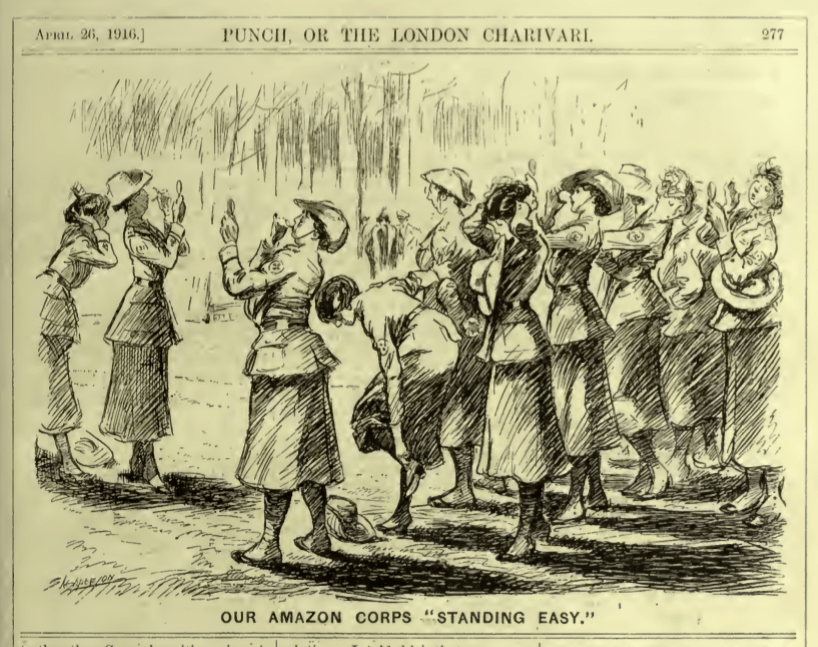
one other point is worth noting here, indicating the discourse of punch magazine across this period . if this were the 26 april 1916 issue of the magazine punch being browsed through by miss annie baird, as she sits perhaps posed by the photographer william mckinley and as she is gazed upon, photographed and documented as she in turn considers the visual representation of punch magazine itself, then in this browsing miss annie baird will see through the magazine a telling visual commentary upon the new social function of women from the period, what is known as the ‘new woman’ of ww1, now being called upon and identified by government as agents of a new and now essential industrial, social, political and military function, as punch nevertheless continues to ridicule both (women in) their new jobs and the women who did nothing, but vacillated greatly between condoning female workers and deriding them…(and) found the changing role of women an easy target, but the fact that this subject was constantly employed for comedy throughout the war suggests that the paper was regrettably accurate in portraying themes the public found amusing.  this is a very obvious way in which comedy was used to displace fear of change. … despite the changing demographics of britain during the war, patriarchal values still dominated the modes of cultural production. women were supposed to be unthreatening; they had little influence in the popular press and therefore punch was free to enforce more familiar attitudes of domesticity and male dominance. cartoons and articles satirising women dominated most issues. (vi)

Screen Shot 2017-12-11 at 13.47.24

notes:

(i) throwing a punch in ireland’s direction, patrick smyth, the irish times, april 25, 2012, https://www.irishtimes.com/culture/heritage/throwing-a-punch-in-ireland-s-direction-1.508445, accessed 9/12/17

(ii) & (iii) punch’s portrayal of redmond, carson and the irish question, 1910-18 author(s): joseph p. finnan. source: irish historical studies, vol. 33, no. 132 (nov., 2003), pp. 424-451 published by: cambridge university press. stable url: http://www.jstor.org/stable/30006911 – accessed: 11-12-2017 12:39 utc

(iv) throwing a punch in ireland’s direction, patrick smyth, the irish times, april 25, 2012, https://www.irishtimes.com/culture/heritage/throwing-a-punch-in-ireland-s-direction-1.508445, accessed 9/12/17

(v)  apes and angels: the irishman in victorian caricature first published in 1971, l. perry curtis, quoted in  joseph p. finnan above.

(vi) joseph p. finnan as above

(vi) esther maccallum-stewart, satirical magazines of the first world war: punch and the wipers times, http://www.firstworldwar.com/features/satirical.htm, accessed 10/12/17


glass | prism

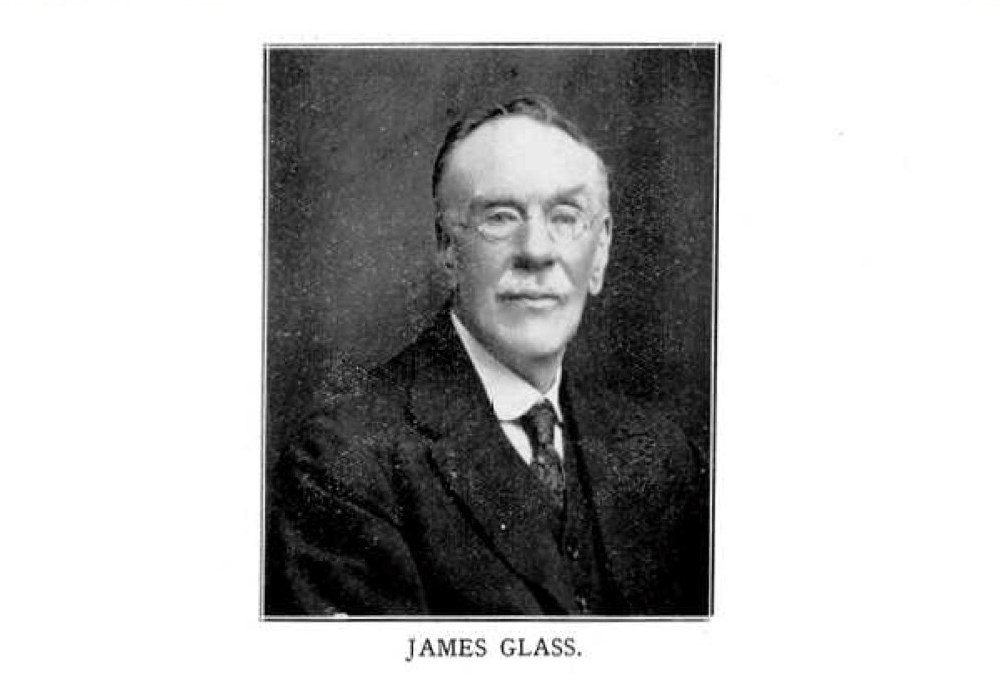
in this 1870s – 1880s period, while william fee mckinney in country antrim engaged in his antiquarian and photographic practices and enthusiasms – collecting farming, church and other records and artefacts (he had a deep interest in the history of presbyterianism in ireland) and in his participation as member of the belfast natural history and philosophical society and as member of the linen hall library – james glass (born 1847, died 1931) was establishing his skills and business as a professional photographer in the city of derry and also engaging within the broader presbyterian community in the city, becoming a respected member of his local presbyterian church – a superintendent of the sabbath school and senior elder at carlisle road presbyterian church, built in 1879 – to the extent of still being noted within his church community up to some twenty years after his death through a portrait and stained glass window gifted to the church by his wife and daughter and a bequest to the church in 1957 known as the ‘james glass bequest’.

Carlisle Road Presbyterian Church - History6

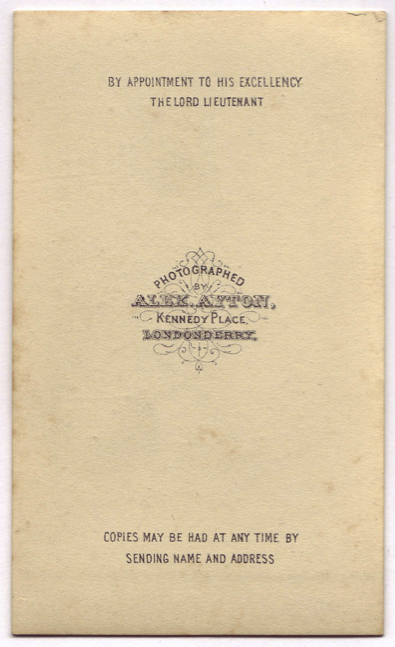
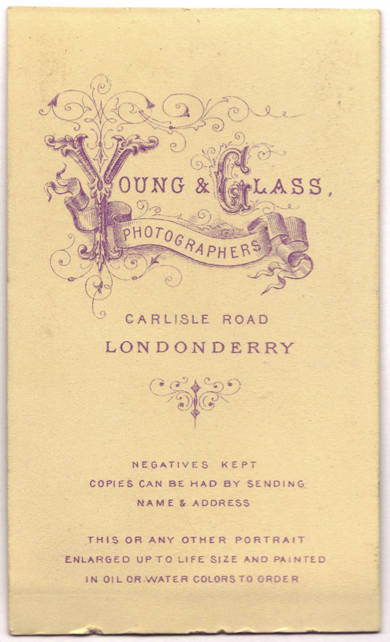
james glass had arrived in derry around 1861 with his father alexander glass, who in 1858 was farming 16 acres in the townland of ballyboe glencar in conwal parish, county donegal, just to the north of letterkenny. in the city of derry james glass was first apprenticed to alexander ayton who had a photographic studio at kennedy place in the city, with glass later establishing his own studio in the city, firstly in partnership with young and then alone.

DerryPhotographs1DerryPhotographs2DerryPhotographs3DerryPhotographs4

with the photographic practices of glass and mckinney as the key agents within our analysis, we are therefore equipped to interrogate the strategic function (i) for the medium of photography, the function of photography as a formation determining linkages between perception, meaning and the construction of identities, the function of photography as a perceptual apparatus with the capacity to capture, orient, determine, intercept, model, control, or secure the gestures, behaviors, opinions, or discourses of living beings, here across the discourses of the presbyterian communities within mid to late 19th and early 20th century ulster and their agency within that period, and across the antiquarian, archival, institutional and technological frameworks within which we now engage with these practices.

in “the confession of the flesh” foucault notes that “i understand by the term “apparatus” a sort of–shall we say–formation which has as its major function at a given historical moment that of responding to an urgent need” (ii)

to interrogate the urgent need which this apparatus answers we can explore how the  aesthetics, ethics, technologies, beliefs, economies, laws, customs, loyalties, affiliations of  the presbyterian communities of late 19th and early 20th century ulster are refracted through the prism of the photographic practices of glass and mckinney.

notes:

(i) & (ii)

foucault defined his use of the term dispositif (apparatus) in 1977:

what I’m trying to pick out with this term is, firstly, a thoroughly heterogenous ensemble consisting of discourses, institutions, architectural forms, regulatory decisions, laws, administrative measures, scientific statements, philosophical, moral and philanthropic propositions–in short, the said as much as the unsaid. Such are the elements of the apparatus. the apparatus itself is the system of relations that can be established between these elements.

secondly, what I am trying to identify in this apparatus is precisely the nature of the connection that can exist between these heterogenous elements… 

between these elements, whether discursive or non-discursive, there is a sort of interplay of shifts of position and modifications of function which can also vary very widely.

thirdly, I understand by the term “apparatus” a sort of–shall we say–formation which has as its major function at a given historical moment that of responding to an urgent need. the apparatus thus has a dominant strategic function. (“the confession of the flesh” (1977) interview. in power/knowledge selected interviews and other writings (ed colin gordon), 1980: pp. 194-228. this interview was conducted by a round-table of historians.)


control

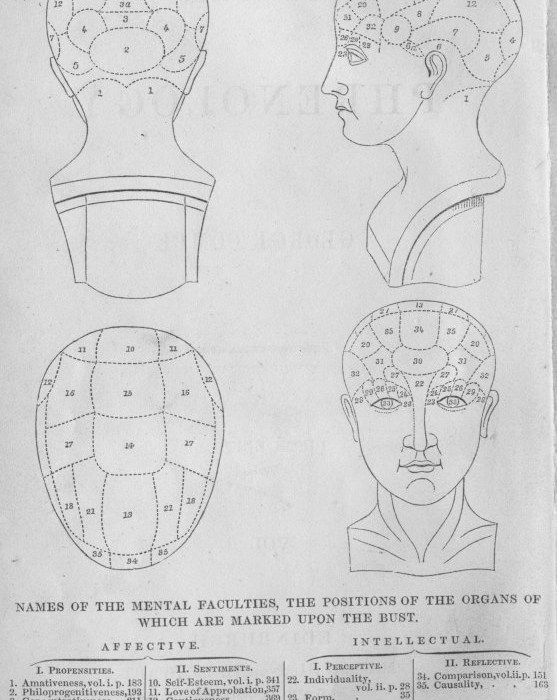
the image above is from george combe’s a system of phrenology, 5th edn, 2 vols. 1853, perhaps the most detailed and authoritative popular phrenology text ever written, and in print across the 19th century.

as noted by allan sekula in the body and the archive, “the proliferation of photography and that of phrenology were quite coincident”, with the discourse of phrenology determining that appearance and mental capacities and character are concomitant, within the same period that the popular discourse of photography was itself developing.

a glance at any photograph of darwin is sufficient to convince any one that his brain was so imperfectly developed that he was not naturally capable of exhibiting any higher functions of mind, and could only be a keen observer of facts and a steady plodder in experiments. (s. mckinney, the science and art of religion (london: kegan paul, trench & co. 1888), pp. 35–36.)

these are the words of samuel bigger giffen mckinney (1848 – 1908), one of the eight siblings of william fee mckinney.  samuel bigger giffen mckinney practised medicine and was an author of five books on religious and moral subjects (i). his commentary on darwinism and religion was a contribution to the dynamic debate on darwin’s theories – primarily in the manner of vehement rebuttal – across the late 1870s and into the 1880s  amongst the presbyterian hierarchy and the broader calvinist, pan-presbyterian communities in and around belfast and within groups such as the belfast natural history and philosophical society. william fee mckinney was an active participant and presence within these circles across this period, just as his nascent interest and enthusiastic amateur photographic practice was developing.

these debates and vehement rebuttals of darwin’s theories had taken particular strength within the presbyterian hierarchy and the broader calvinist, pan-presbyterian communities in and around belfast as response to an address and subsequent publication in 1874 by john tyndall to the annual meeting of the british association for the advancement of science, which was held in belfast that year. tyndall’s address was essentially a call to liberate the discourse of science from theological control.

for william fee mckinney and his circles what were the other active forces with the capacity to capture, orient, determine, intercept, model, control, or secure the gestures, behaviors, opinions, or discourses of living beings?

notes:

(i)

it is worth noting here that i will return later to the fact that samuel mckinney’s texts continues on to accuse the evolutionary anthropologist defenders of darwinism – in strikingly ‘progressive modern’ terms – of racism and imperialism

(ii)

“i will call an apparatus literally anything that has in some way the capacity to capture, orient, determine, intercept, model, control, or secure the gestures, behaviors, opinions, or discourses of living beings.” giorgio agamben, what is an apparatus and other essays, stanford university press (2009)


…to speak of ’98

the sentry hill that features as one part in this research was the home of eminent presbyterian gentleman-farming stock. its name given to it as it sits upon the geographic feature of sentry hill, which is just above glengormley and corr’s corner near carnmoney, co antrim, just to the north of the city of belfast.

the early 19th-century farmhouse onsite was the home of the mckinney family who were descended from scottish presbyterians who fled to ireland after the battle of sherrifmuir of 1716, with some of the family out with united irishmen of 1798. in the 1700s there was a thatched cottage onsite and then from the 1830s, once the mckinney family had purchased the land, a collection of larger house and farm buildings.

one family member at sentry hill from  was william fee mckinney (1835 – 1917),  a prosperous farmer and meticulous collector of farming, church and other records and artefacts, and a keen amateur photographer. he was a member of the linen hall library and the belfast natural history and philosophical society. he was secretary of carnmoney presbyterian church for 62 years.

nominative determinism & its reversal

what is a sentry hill? it is a fairly common name, there are probably at least half a dozen such named sites in ireland. each is likely a site which has at some point in its past seen the custom of posting a sentry watchman on its commanding height – to guard against the approach of some enemy force or threat.

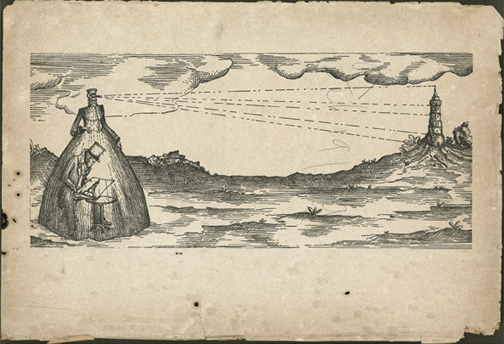
so a sentry hill is a site that derives its identity from its function, from the primacy of the visual and named as such. the work here above perhaps illustrates a sentry hill in reverse, with those notional images seen from upon a height that identify the sentry hill being reversed to images on a height being seen and sketched within a quixotic re-imagining of one of the optical devices of proto-photography from the 19th century, the camera obscura.

the work illustrated above is obscura object, one of a series of works – copper engraving, object, and installation – by artist stephen beckman from 2008. for more on the work see the artist’s essay in photography beyond technique, tom persinger, focal press, 2014.

founders come first, then profiteers

an absence on a map is an invitation to speculate.

in contemporary terms, the first ordnance survey act of map-making in ireland in the 1830s  – through an act of government no less –  was an action aimed at more concretely monetising the discourse on irish land. the act of government (1820s?) (edit see i.) to update irish land valuations for land taxation purposes sent out surveyors as boots on the ground across the commons, townlands, parishes, counties and provinces of ireland,  instructed essentially to act as speculators, de facto future traders, formatting land through the synced instrumentation and techniques of mapping|monetising – bringing into play the tools of boundaries, borders, relations of contract rather than kinship, corporation rather than association. these negotiations are of course now impossible to conceive of without that overarching representation dramatised within friel’s work translations, so perhaps to mix it up a bit and put a crack in the narrative, we could attempt to see distorted refractions in the seemingly incomprehensible song from John Adams’ opera Nixon in China…

The discussion turns to China’s future.

Mao: Founders come first, then profiteers.

i. : “in 1824, a house of commons committee recommended a townland survey of Ireland with maps at the scale of 6″, to facilitate a uniform valuation for local taxation. … The survey was directed by colonel thomas colby… civil assistants were recruited to help with sketching, drawing and engraving of maps, and eventually, in the 1830’s, the writing of the memoirs” (ordnance survey memoirs of ireland, volume two, parishes of county antrim (i), 1838-9, ballymartin, ballyrobert, ballywalter, carnmoney, mallusk, pub the institute of irish studies, belfast & the royal irish academy, dublin, 1990)


participate

Screen Shot 2017-06-22 at 18.37.01

To all artists, makers and filmmakers here in the Derry City and Strabane District Council region:
As a valued and active member of the Arts & Craft community, we would be keen for your ideas and opinions to be heard in the Council’s co-design process for its Arts & Culture Strategy 2017-2022.
We would encourage you to attend the open “brainstorming” session on Tuesday 27th June, at 2-3.30 pm in the Whitaker Suite in the Guildhall, Derry. Please do click through on the link provided below to register your interest and attendance if possible.

http://www.derrystrabane.com/Services/Arts-and-Culture

If you want to influence the future development of Visual & Cinematic Arts and Crafts in this Council region for the better, please take this opportunity to participate and make your voice heard.

If timing is difficult for you on Tuesday, you might want to consider the session for Individual Artists and Practitioners at 8 – 9pm on Monday 26th June in the same venue.

(I have volunteered, with Janet Hoy of CVA, to take on the task of co-ordinating the response of the Visual & Cinematic Arts and Craft community here in the DCSDC region to the Council’s co-design process for the Arts & Culture Strategy 2017-2022. )
Thanks, Declan Sheehan & Janet Hoy